
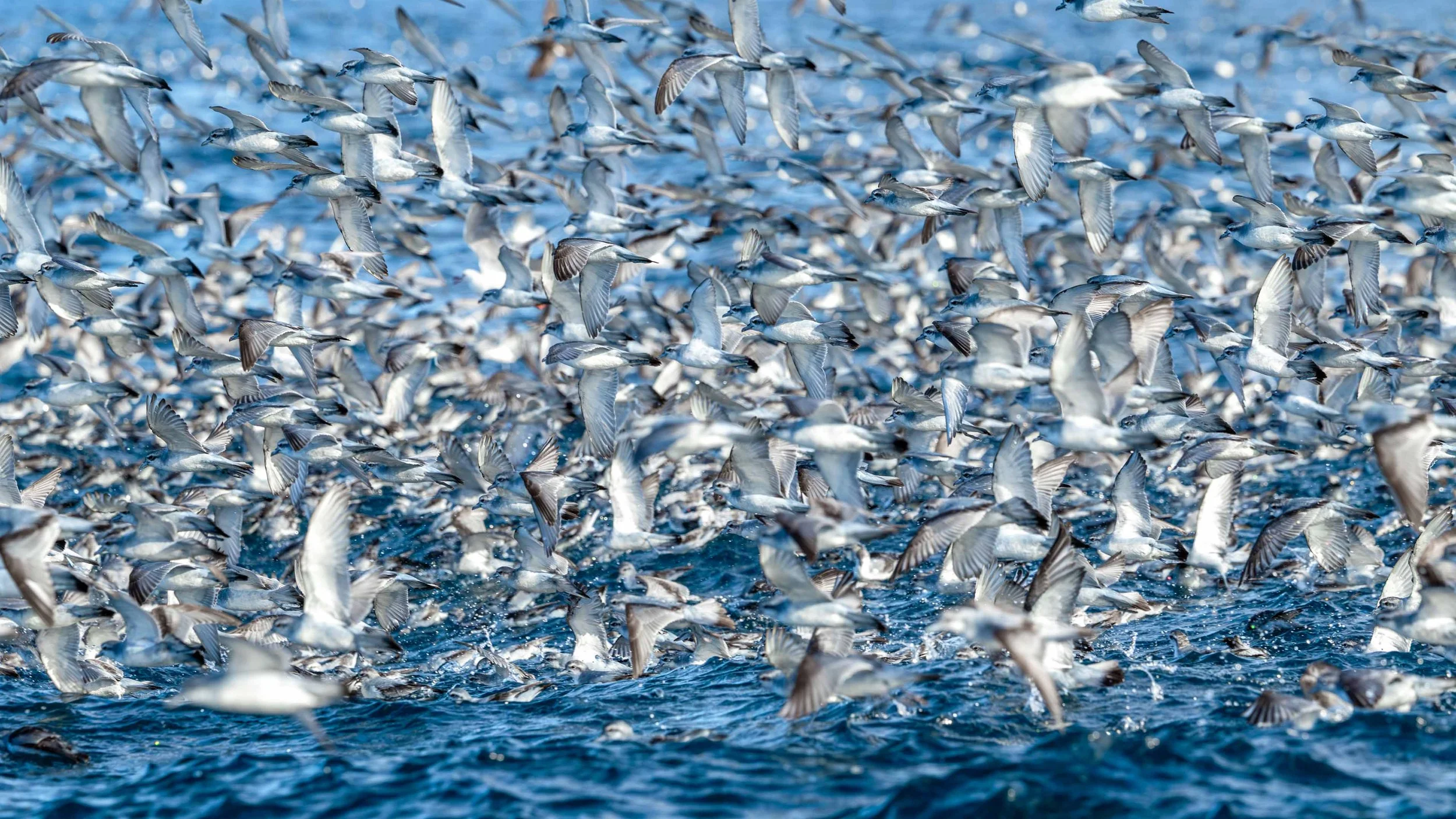
WHEN THE OCEAN ERUPTS WITH SEABIRDS
Experience our seabird feeding frenzy workups …
One of nature’s great seabird spectacles
Tutukaka, New Zealand
During spring and summer, the waters offshore from Tutukaka can erupt into huge seabird feeding workups, often involving tens of thousands of seabirds — a spectacular wildlife encounter that The Petrel Station seabird tours are famous for and one of New Zealand’s most extraordinary birdwatching experiences.
What’s it like?
The sight and commotion of thousands of seabirds, the constant sound of chattering and wings fluttering, the heady seabird smell hanging in the air, the water boiling with huge schools of fish …
… all creating a true sensory overload that our guests often describe as one of the most memorable birding spectacles they’ve experienced.

An exciting part of our spring and summer seabird tours is that, alongside the stunning lineup of seabird species encountered throughout the day, there’s also the chance to experience these huge feeding workups of seabirds and massive schools of fish, all feeding together on the abundant zooplankton that's near the surface.
We’ll often encounter 20,000+ seabirds in the workups, and on exceptional days, the scale can be astonishing, with over 100,000 seabirds involved.
Whether you’re a birdwatcher, wildlife enthusiast, photographer, or simply someone wanting to experience nature’s splendour, this is one of the most exciting offshore wildlife birding experiences in New Zealand.

Why Tutukaka has such large feeding workups
It comes down to a remarkably powerful combination that develops offshore from Tutukaka each spring and summer: Huge seabird breeding populations, enormous schools of fish, and highly productive waters rich in zooplankton and baitfish.
Huge seabird breeding populations
A key reason why such large numbers of seabirds can gather is the huge seabird breeding populations on the nearby Poor Knights Islands — the only place in the world where Buller’s Shearwater breeds, and also home to one of New Zealand’s largest Fairy Prion colonies.
The islands are a pest-free reserve and are also surrounded by a marine reserve with extremely healthy fish populations, helping create ideal feeding conditions offshore.
Few places in the world offer the chance to witness such large numbers of seabirds at sea on a full-day pelagic tour, and it’s one of the reasons why offshore from Tutukaka is such an important seabird hotspot.
How the spectacle unfolds
Zooplankton-driven workups
The seabirds’ spring and summer breeding season coincides with major phytoplankton blooms, which in turn support huge concentrations of zooplankton in the highly productive waters offshore from Tutukaka, and the greater Hauraki Gulf pelagic zone. When these rich concentrations gather near the surface, thousands of seabirds and huge schools of fish come together to feed in dense workups. These are the main kind of workup that we encounter.
Bait-ball driven workups
Very occasionally, we also encounter bait-ball workups when pelagic predators such as marlin, tuna, dolphins and whales, drive baitfish into tight balls near the surface. These are fast, dramatic feeding events, with fish underneath, seabirds on the surface, gannets plunging from above, and the water boiling with activity.
Large seabird rafts
When seabirds aren’t actively feeding, or on calmer days, they will settle in huge rafts of thousands of birds spread across the ocean while they wait for their food source to return to the surface. These rafts can stretch for hundreds of metres, and sometimes kilometres, creating an impressive spectacle that shows the sheer scale of seabird life present in this area.
The seabirds that drive the spectacle
At the heart of these remarkable feeding workups are just three key pelagic seabird species occurring in very large numbers and creating the spectacle we encounter offshore.
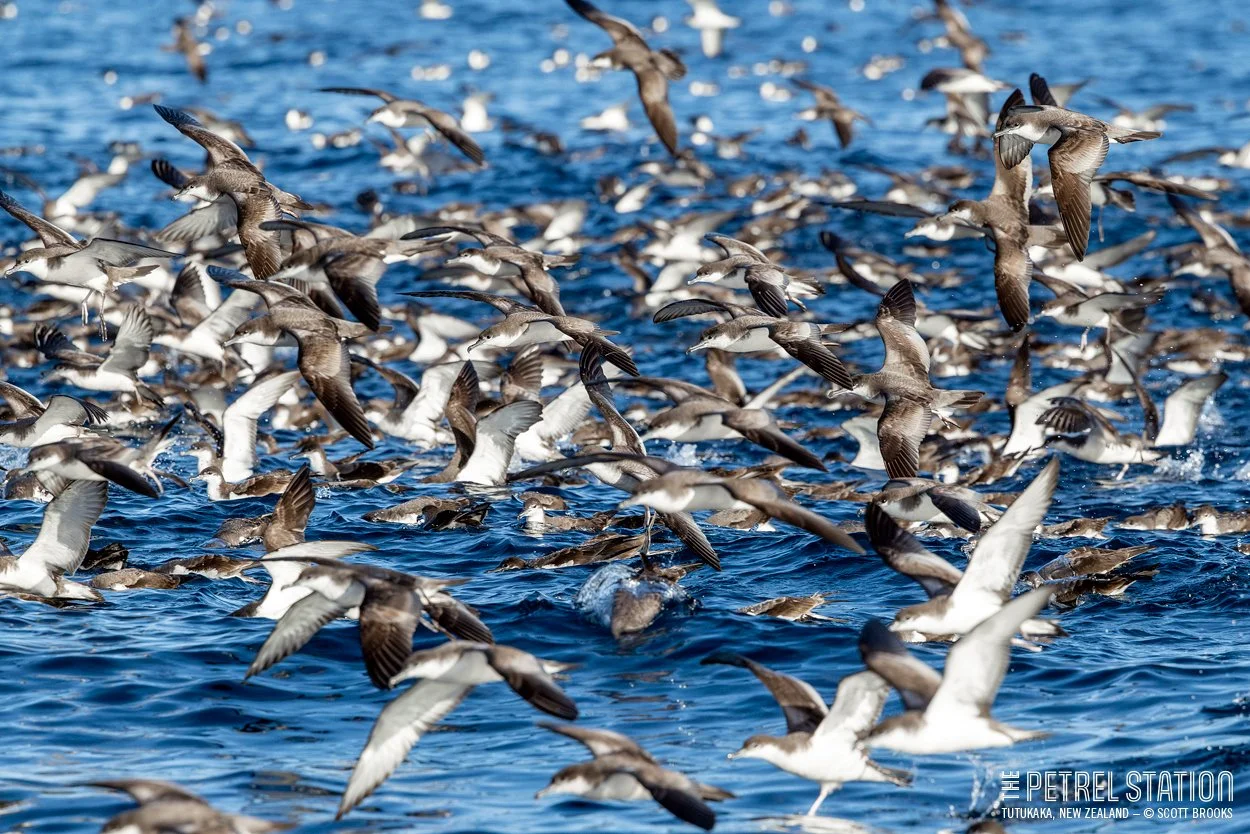
BULLER’S SHEARWATER

This is the only place in the world where Buller’s Shearwater breed and they are a major part of the feeding workups, when huge numbers can gather offshore to feed. Occurs in big numbers: Mid September to late March.
FAIRY PRION

Fairy Prion are the other major player in the workups and breed here in one of the largest populations in New Zealand. At times they can appear in astonishing densities while feeding. Occurs in big numbers: August to mid January.
FLUTTERING SHEARWATER
Fluttering Shearwater also breed locally and, when present in large numbers, can add significantly to the scale and energy of the workups. Sometimes gathers in thousands: Mid September to late March.
Other seabirds sometimes show up in small numbers including: Flesh-footed Shearwater, Sooty Shearwater, Short-tailed Shearwater, Albatross, Red-billed Gull, Grey Noddy, and other pelagic seabird species.
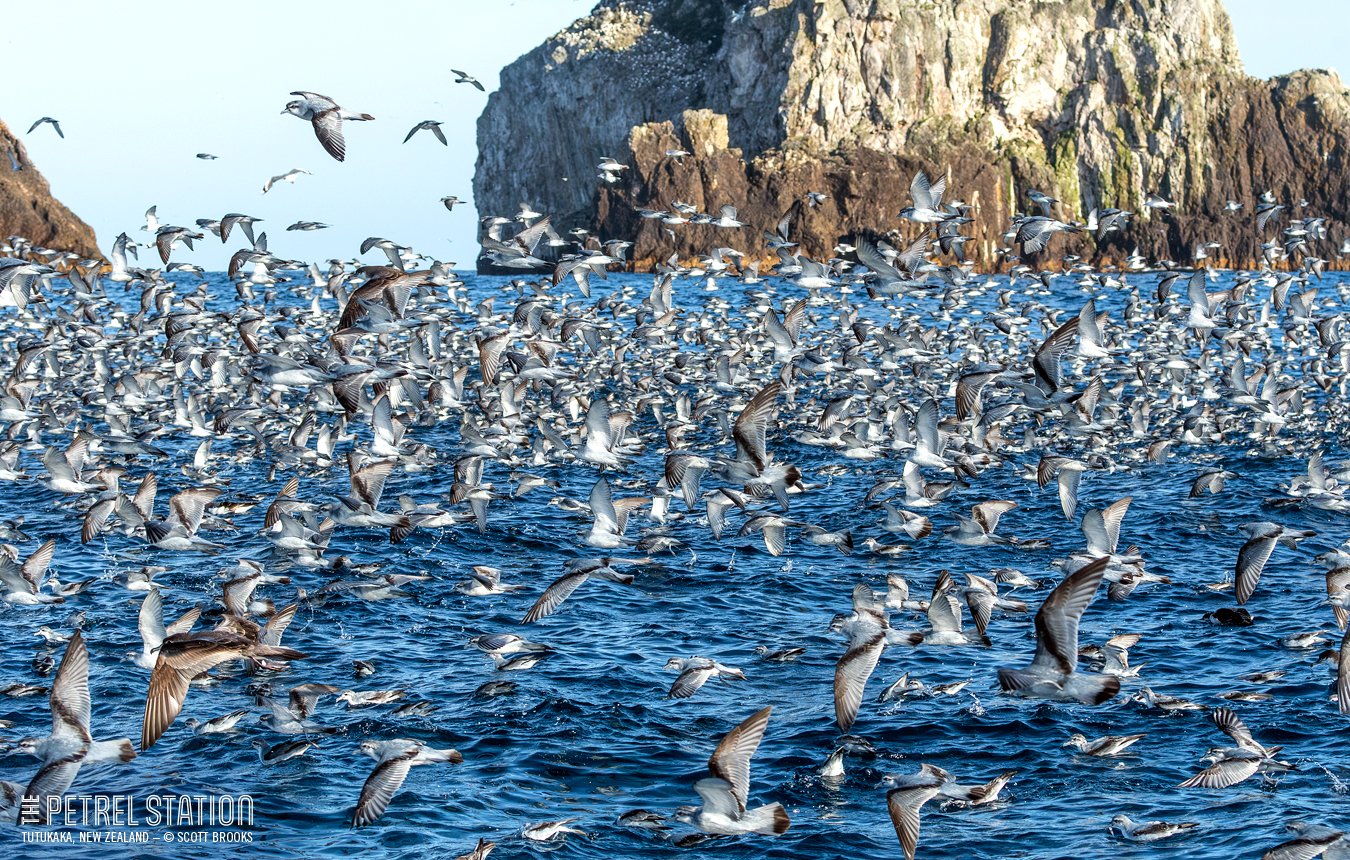
When does this happen?
The seabird feeding workups occur during spring and summer when rich concentrations of zooplankton are near the surface and seabirds, together with fish, gather to feed.
SPRING
Spring generally has the biggest and most dramatic seabird feeding workups. This is when all three main seabird species are present and when zooplankton is often at its richest, providing the potential for the largest feeding events, sometimes involving tens of thousands of seabirds.
SUMMER
Summer also delivers impressive workups. Our summer feeding workups and rafts are mostly Buller’s Shearwaters, and sometimes Fluttering Shearwaters (by mid January most Fairy Prions have departed). Zooplankton is still plentiful but variable.
AUTUMN/WINTER
Outside spring and summer, large feeding frenzies are generally not a feature, although from August onwards Fairy Prion numbers begin building again ahead of the main spring season.
Each season brings different birding highlights on The Petrel Station seabird tours, which is part of what makes this area so rewarding throughout the year and why no two tours are ever the same. For an overview of seasonal seabird activity, check out our Seasons page.

Experience this incredible seabird spectacle for yourself
Join The Petrel Station seabird tours for a remarkable day offshore among New Zealand’s extraordinary seabird life.


keep updated
Find out when new seabird tour dates are added, and other news from The Petrel Station.