
Albatross of The Petrel Station
Tutukaka, New Zealand
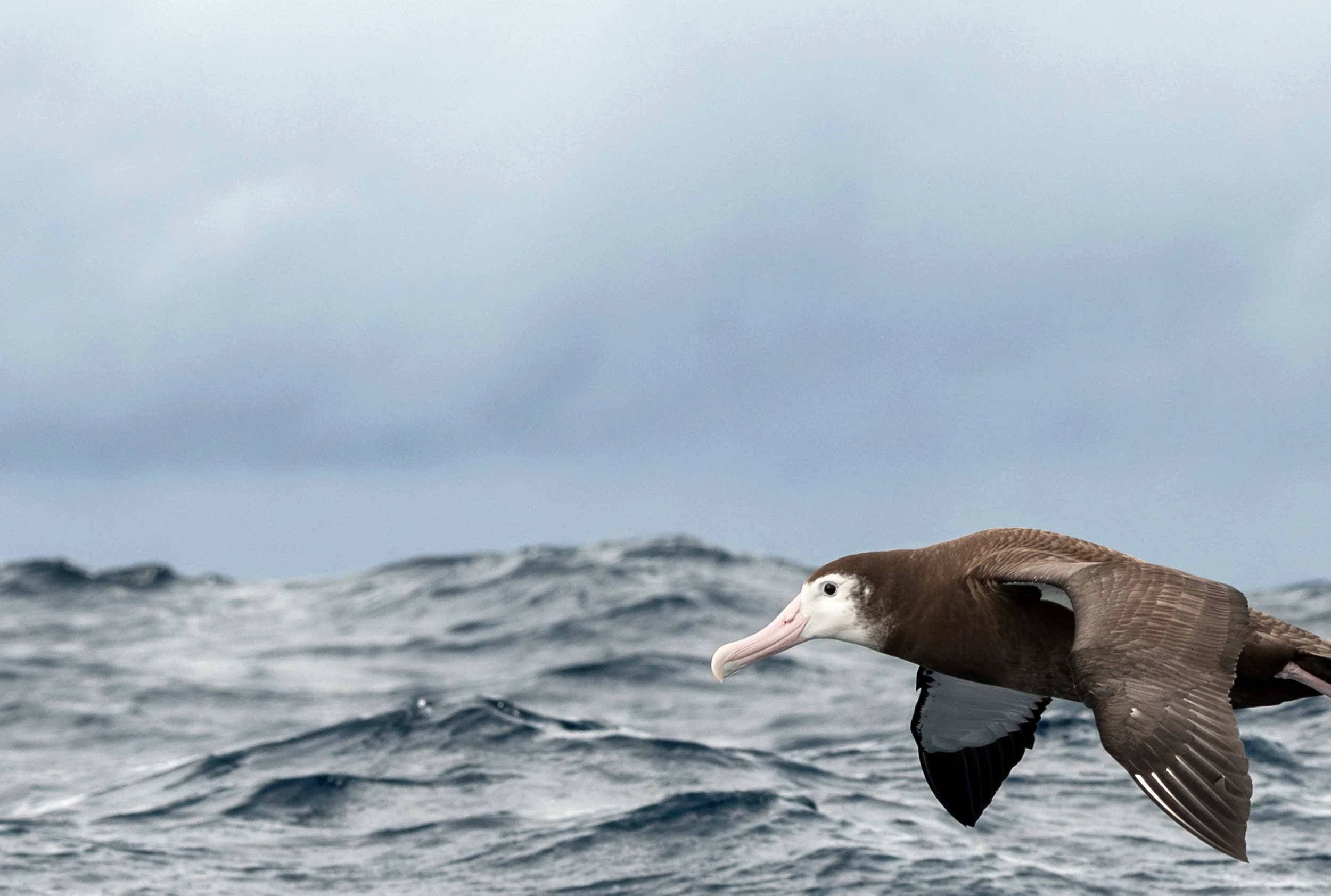
Watching a massive Albatross soaring effortlessly around is one of the great pelagic birdwatching experiences, and The Petrel Station seabird tours can produce an exceptional range of these stunning ocean wanderers.
12
ALBATROSS SPECIES SEEN
Albatross are some of the largest birds in the world, and it’s hard to beat the sight of a graceful huge albatross flying around the boat, or settled on the water beside us – it’s always a highlight for the birders, wildlife enthusiasts, and photographers onboard.
During autumn, winter and spring these giants of the southern ocean head to our area and The Petrel Station seabird tours have recorded an outstanding diversity of albatross species offshore from Tutukaka. In the right seasons, tours can produce a remarkable mix with sometimes six or seven species in a day – making this one of New Zealand’s great places to encounter albatross alongside our already exceptional range of seabird species.
Below are the Albatross species we’ve recorded on The Petrel Station seabird tours, and when they’re most likely to be seen — though sightings may occur outside these times.
JUMP TO SPECIES:
Chatham Albatross • Wandering Albatross • New Zealand Wandering Albatross (Gibson’s) • New Zealand Wandering Albatross (Antipodean) • Northern Royal Albatross • Southern Royal Albatross • Light-mantled Sooty Albatross • Buller’s Albatross • Campbell Albatross • Black-browed Albatross • Salvin’s Albatross • White-capped Albatross • Indian Yellow-nosed Albatross
Chatham Albatross
SPECIALTY SEABIRD of The Petrel Station
ENDEMIC SPECIES
When seen: October to December
Occurrence: Occasional visitor
Scientific name: Thalassarche eremita
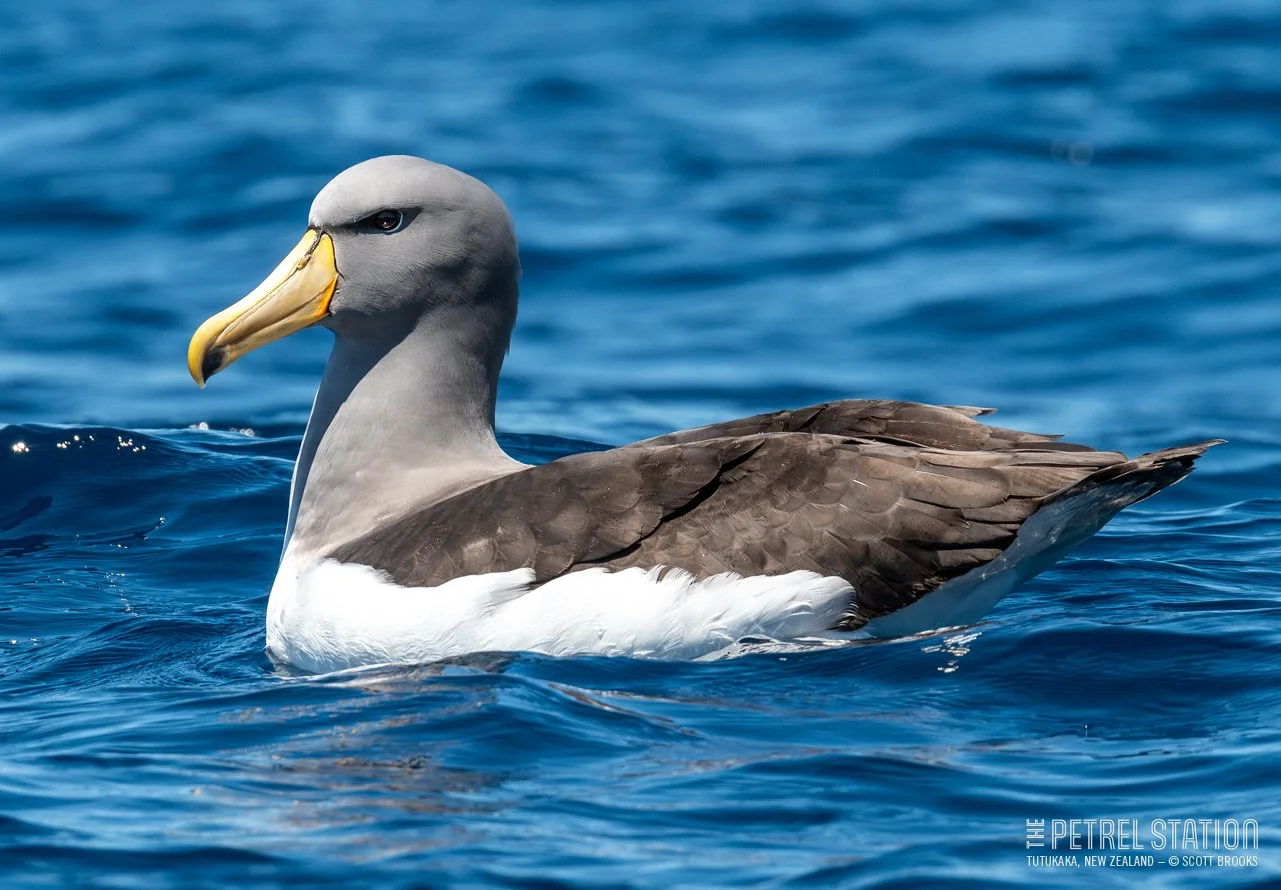
The stunning Chatham Albatross is one of The Petrel Station seabird tours specialty seabirds, and one that many birders hope will appear on our spring seabird tours. It remains a scarce albatross to encounter off mainland New Zealand, which makes every sighting very special.
This New Zealand endemic only breed on the tiny Pyramid Rock in the Chatham Islands, and over the last few years, The Petrel Station seabird tours has become one of the very few places outside the Chathams where birders have a realistic chance of encountering one, with a handful of spring sightings most years.
They are a very striking albatross, with a bright yellow bill, dark hood, and 2.5 metre wingspan, and its always a very exciting moment when one glides in close and you pick out that bright yellow banana bill!
Also called Chatham Mollymawk in New Zealand.
Wandering Albatross (exulans)
When seen: October to December (occasionally seen at other times)
Occurrence: Vagrant visitor
Scientific name: Diomedea exulans
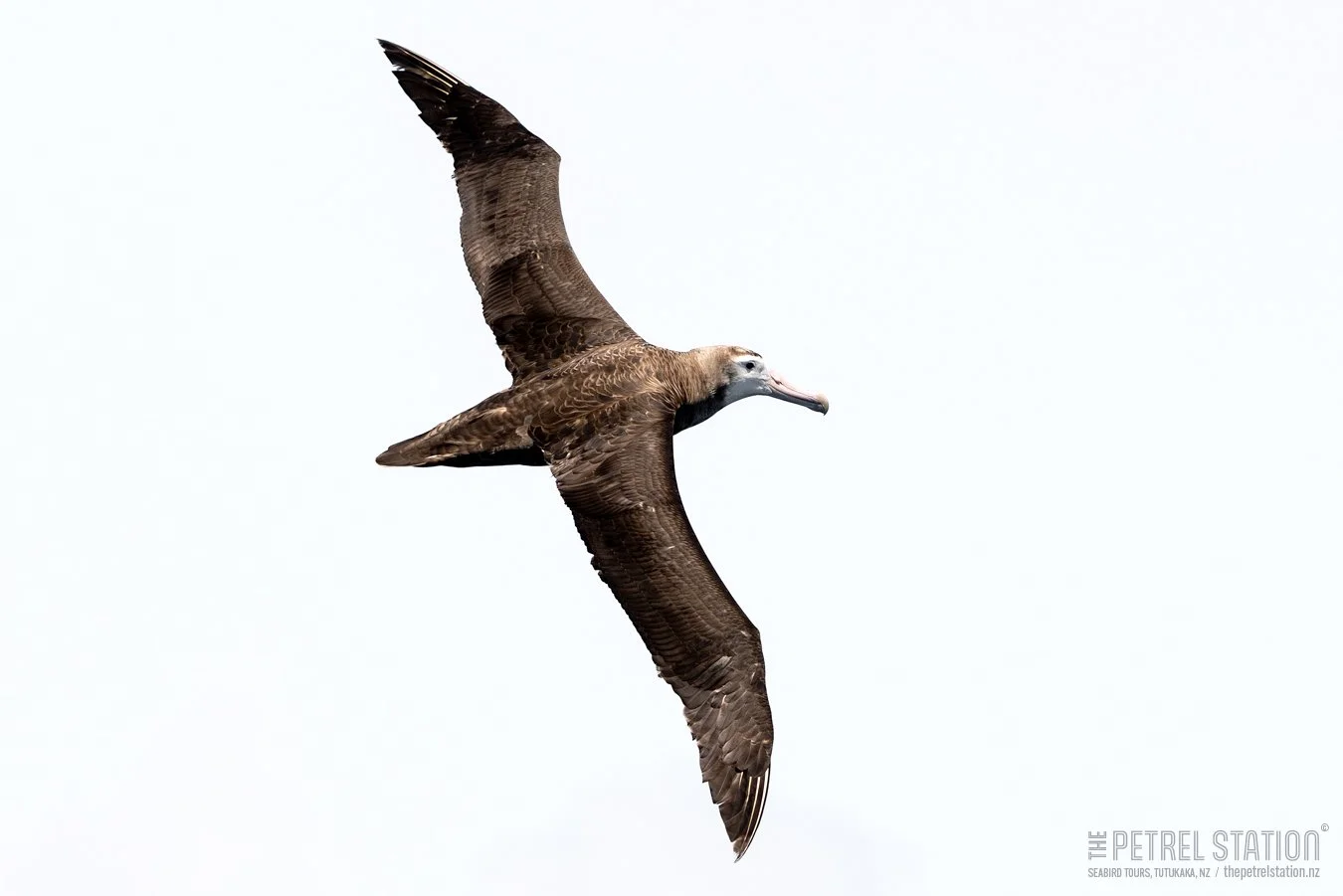
When a Wandering Albatross appears around the boat, either soaring effortlessly around us or sitting on the water nearby, the sheer scale is awe-inspiring.
They have the largest wingspan of any bird in the world, reaching up to 3.5 metres, with a huge body and an enormous bill to match. They breed in the Southern Ocean rather than New Zealand and are only occasional visitors to our area.
They can appear in a stunning range of plumages, from beautiful dark chocolate-brown younger birds to very white majestic adults. Any sighting of one offshore from Tutukaka is always a special treat.
New Zealand Wandering Albatross (Gibson’s)

ENDEMIC SPECIES
When seen: April to December (occasionally seen at other times)
Occurrence: Regular visitor
Scientific name: Diomedea antipodensis gibsoni
The huge Gibson’s subspecies of the New Zealand Wandering Albatross is our most regularly encountered ‘great’ albatross on The Petrel Station seabird tours. Watching one sweep past the boat with its massive wings outstretched is one of the great thrills of being offshore.
This New Zealand endemic breeds on New Zealand’s subantarctic islands and forms part of the New Zealand Wandering Albatross complex. With wingspans up to 3.35 metres, they are massive birds, and their plumage can vary from darker younger birds to very pale adults.
They also create some of the more interesting identification challenges offshore, as birders work through the subtle differences between the various wandering albatross forms.
New Zealand Wandering Albatross (Antipodean)

ENDEMIC SPECIES
When seen: August to December (occasionally seen at other times)
Occurrence: Occasional visitor
Scientific name: Diomedea antipodensis antipodensis
The scarcer Antipodean subspecies of the New Zealand Wandering Albatross is always a special bird to encounter on tour. Like the other wandering albatross, whenever one appears soaring on their huge wingspan of up to 3.35 metres, they bring a sense of grandeur, and are always a memorable sight.
They are a New Zealand endemic, breeding mostly on the Antipodes Islands, which are part of New Zealand’s subantarctic islands, and are much less frequently encountered here than Gibson’s subspecies of NZ Wandering Albatross. Plumage varies with age, but they retain a dark brown cap on the head, helping give them a distinctive look.
Northern Royal Albatross

ENDEMIC SPECIES
When seen: April to December (occasionally seen at other times)
Occurrence: Regular visitor
Scientific name: Diomedea sanfordi
Few birds convey grace quite like a Northern Royal Albatross, with their crisp, elegant look, solid dark upperwings and a black cutting edge on the bill. They are one of the great albatross species of the Southern Ocean, and always a highlight when encountered.
This huge New Zealand endemic belongs to the great albatross group and can reach a wingspan of up to 3.4 metres. Whether sweeping around the boat or sitting calmly on the water, they are always an impressive seabird to spend time with.
Southern Royal Albatross

ENDEMIC SPECIES
When seen: September to December
Occurrence: Very scarce visitor
Scientific name: Diomedea epomophora
The Southern Royal Albatross are among the largest flying birds on Earth, and are a truly magnificent seabird to encounter.
They have the second-largest wingspan in the world reaching up to 3.5 metres, only just slightly behind Wandering Albatross. They are similar to Northern Royal Albatross, but have a white leading edge, and usually show more white in the upperwings.
This is another New Zealand endemic, but it is only very rarely recorded this far north, so any encounters out on The Petrel Station seabird tours are always a special treat.
Light-mantled Sooty Albatross
When seen: July
Occurrence: Very scarce visitor
Scientific name: Phoebetria palpebrata
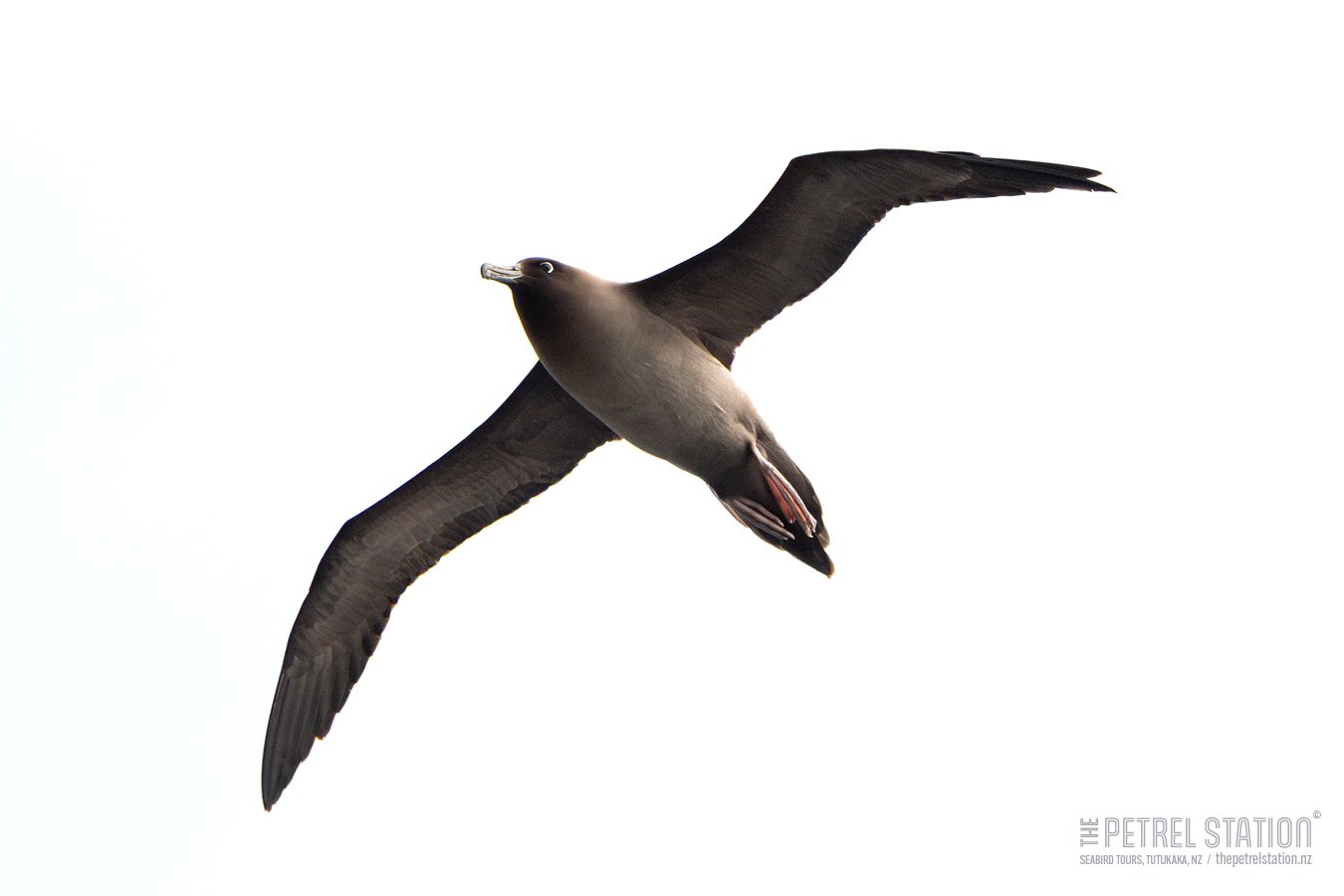
For many, Light-mantled Sooty Albatross are one of the most beautiful albatross of them all.
Sleek, elegant, dark and subtly marked with soft gradients of brown, set off by a striking pale eye ring, makes these albatross very different from all the other albatross we encounter. They are also incredibly graceful in flight, and have an impressive wingspan of up to 2.2 metres.
They breed in New Zealand and elsewhere in the Southern Ocean, but are a very rare visitor to our area. Any sighting is a real treat.
Buller’s Albatross
ENDEMIC SPECIES
When seen: May to December (occasionally seen at other times)
Occurrence: Regular visitor
Scientific name: Thalassarche bulleri
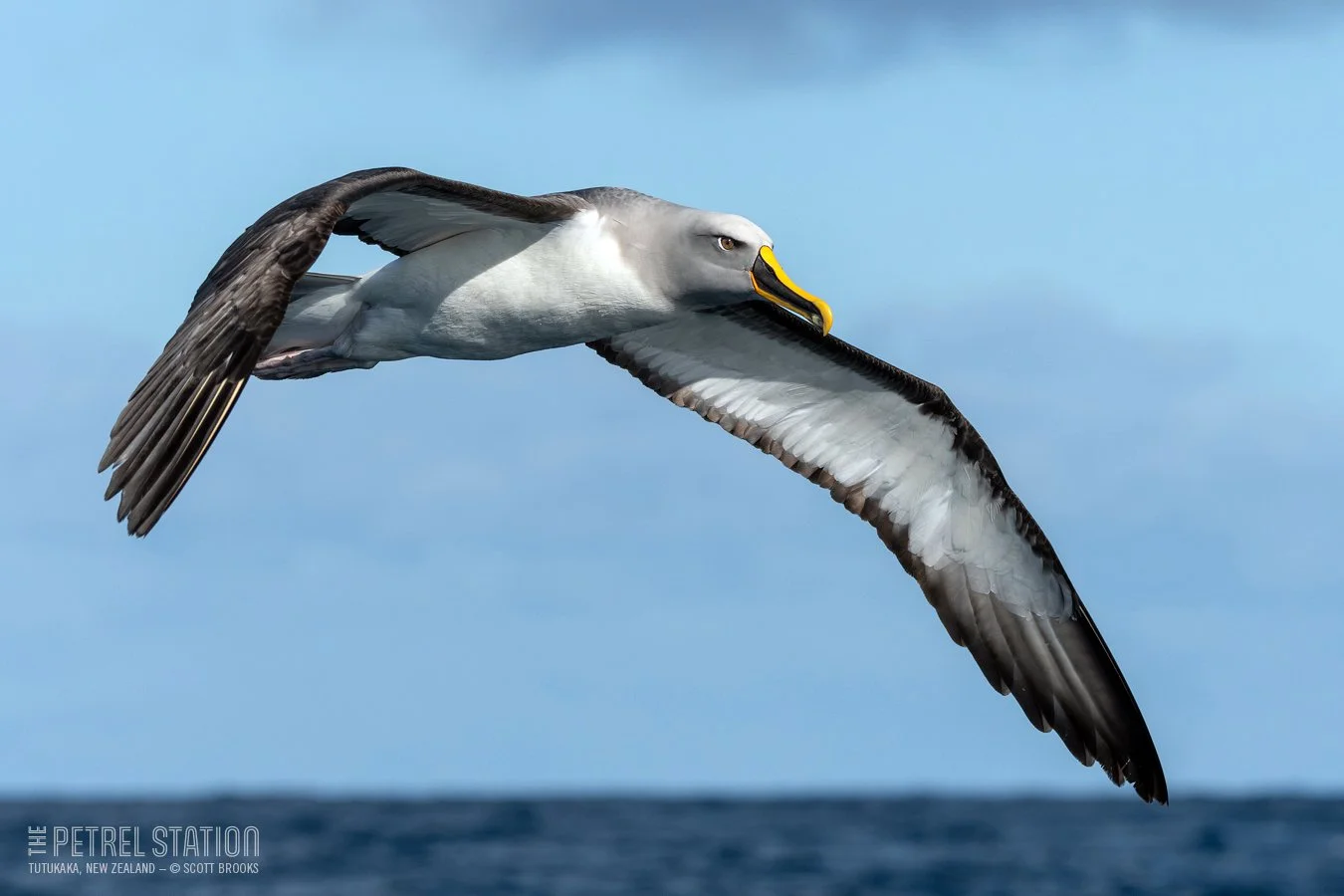
Buller’s Albatross are a beautiful and very distinctive species, with a dark hood , a striking black and bright yellow bill, and thick leading edge on their underwing they are simply stunning to see soaring around the boat on their 2.2 metre wingspan, and are alway a pleasure to see offshore.
They’re a New Zealand endemic and one of the regular albatross encountered on The Petrel Station seabird tours. Most breed on islands further south, but there is also a tiny population on the Three Kings Islands, the most northern albatross breeding site in New Zealand.
Also called Buller’s Mollymawk in New Zealand.
Campbell Albatross
ENDEMIC SPECIES
When seen: April to November (occasionally seen at other times)
Occurrence: Regular visitor
Scientific name: Thalassarche impavida
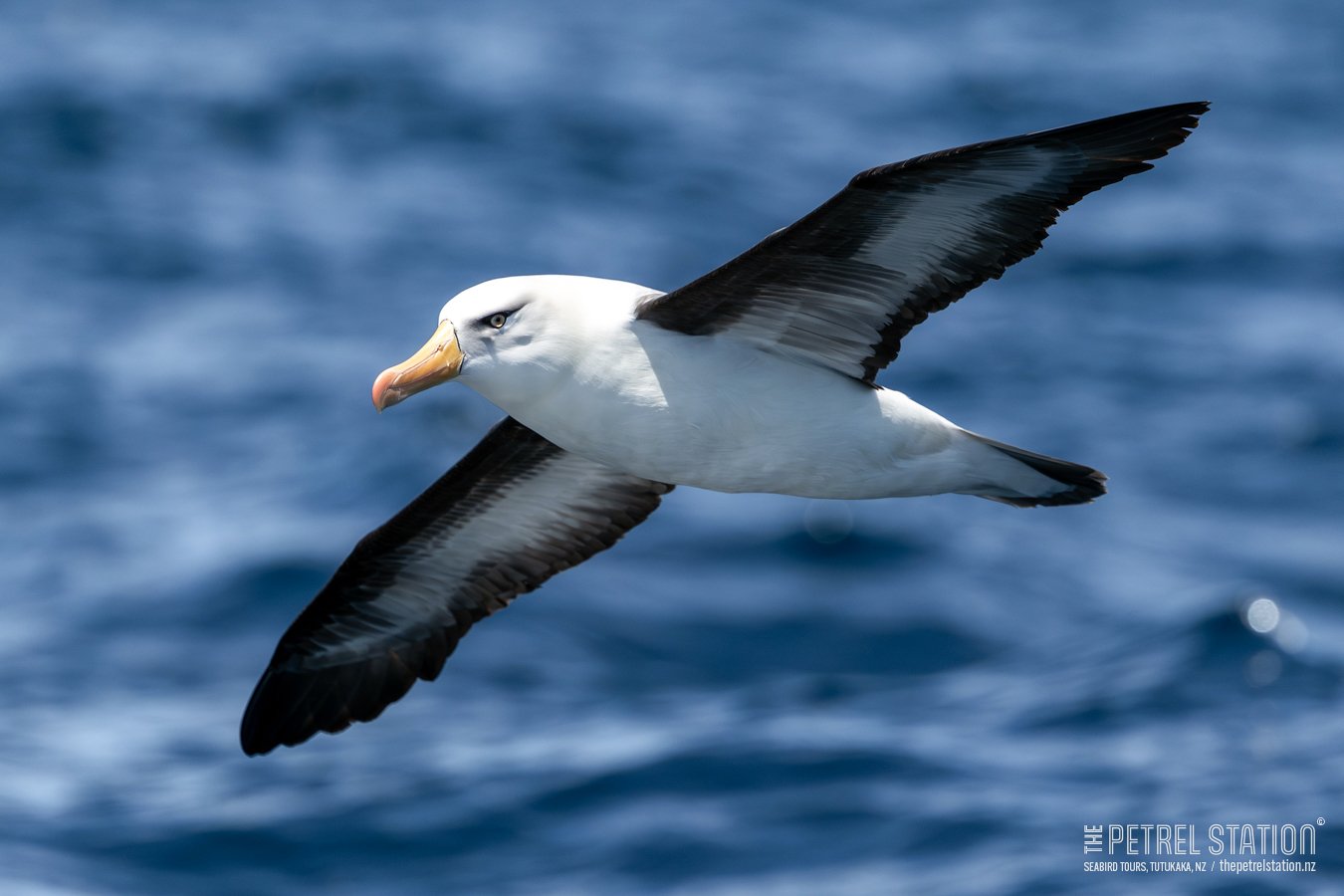
Campbell Albatross are a stunning New Zealand endemic. They are very similar to Black-browed Albatross and telling the two apart can be an interesting challenge, especially in younger birds. As they mature, Campbell Albatross develop their distinctive amber eye (whereas Black-browed have a dark brown eye), along with a beautiful rose-orange bill. With a wingspan of up to 2.3 metres, they are very impressive to see.
Also called Campbell Mollymawk in New Zealand.
Black-browed Albatross
When seen: May to November (occasionally seen at other times)
Occurrence: Regular visitor
Scientific name: Thalassarche melanophris
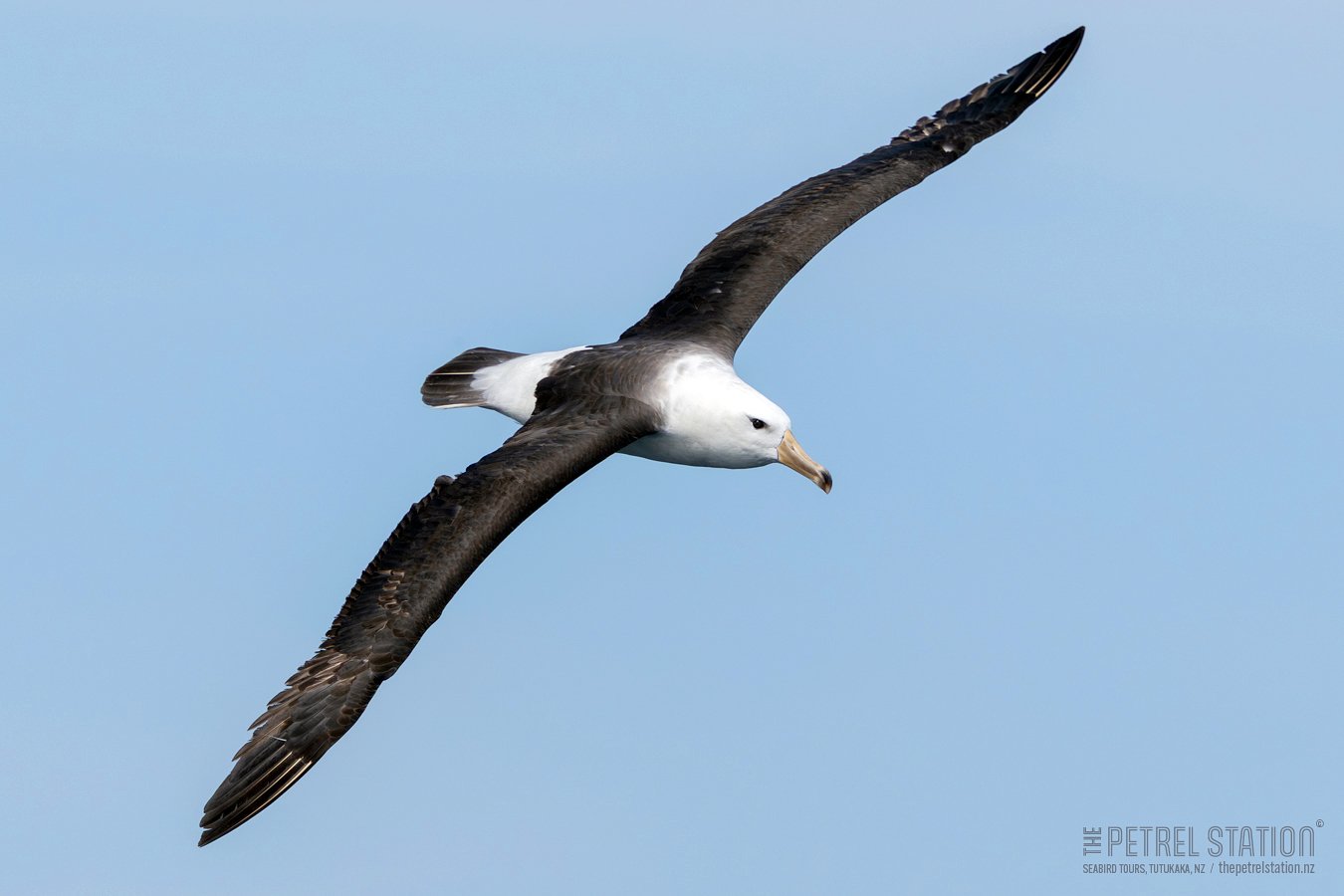
Black-browed Albatross are another stunning species, and with a wingspan of up to 2.3 metres, they are impressive to watch soaring around us.
They are very similar to Campbell Albatross, and separating the two through different ages can be a fun identification challenges offshore. As they mature, Black-browed Albatross retain a darker eye than Campbell Albatross, while adults also develop the beautiful rose-orange bill.
Also called Black-browed Mollymawk in New Zealand.
Salvin’s Albatross
ENDEMIC SPECIES
When seen: October to December (occasionally seen at other times)
Occurrence: Regular visitor
Scientific name: Thalassarche salvini
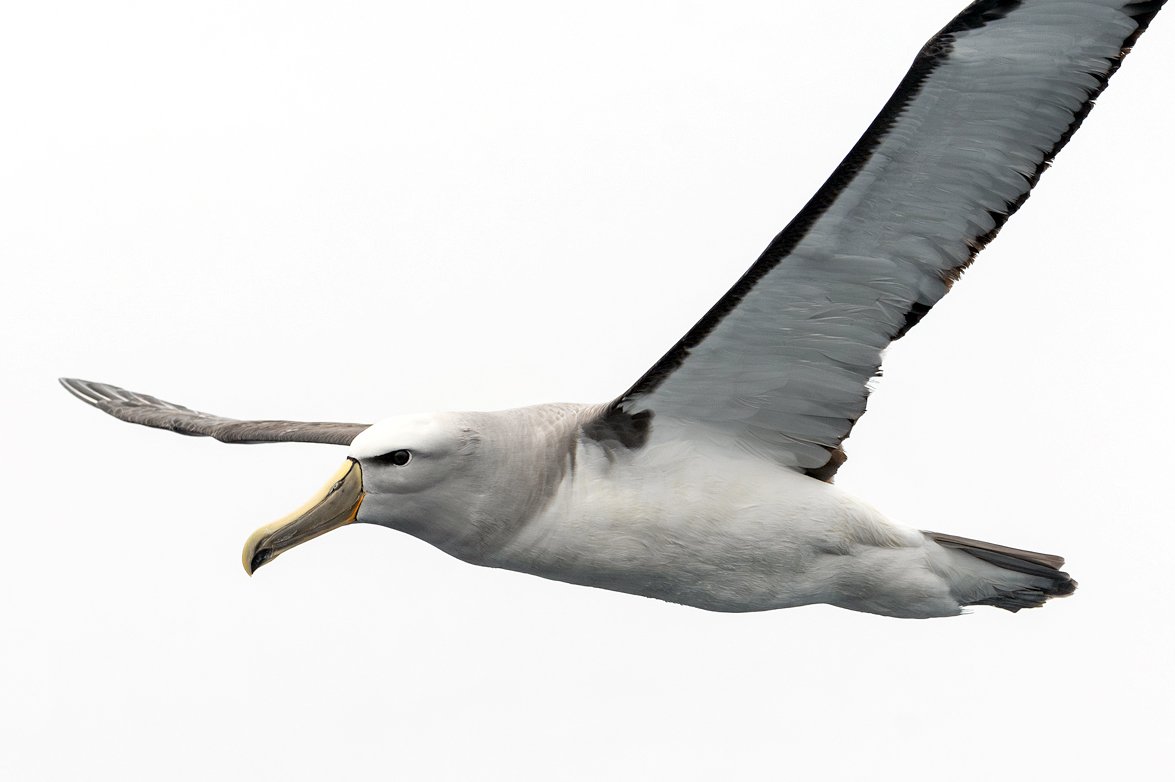
Salvin’s Albatross are a beautiful albatross species with a light grey hood and a duller yellow bill. This New Zealand endemic has a wingspan of up to 2.5 metres and is one of the seasonally regular albatross encountered offshore from Tutukaka. Like the other albatross, it is always a pleasure to watch as it glides effortlessly around the boat.
Also called Salvin’s Mollymawk in New Zealand.
White-capped Albatross
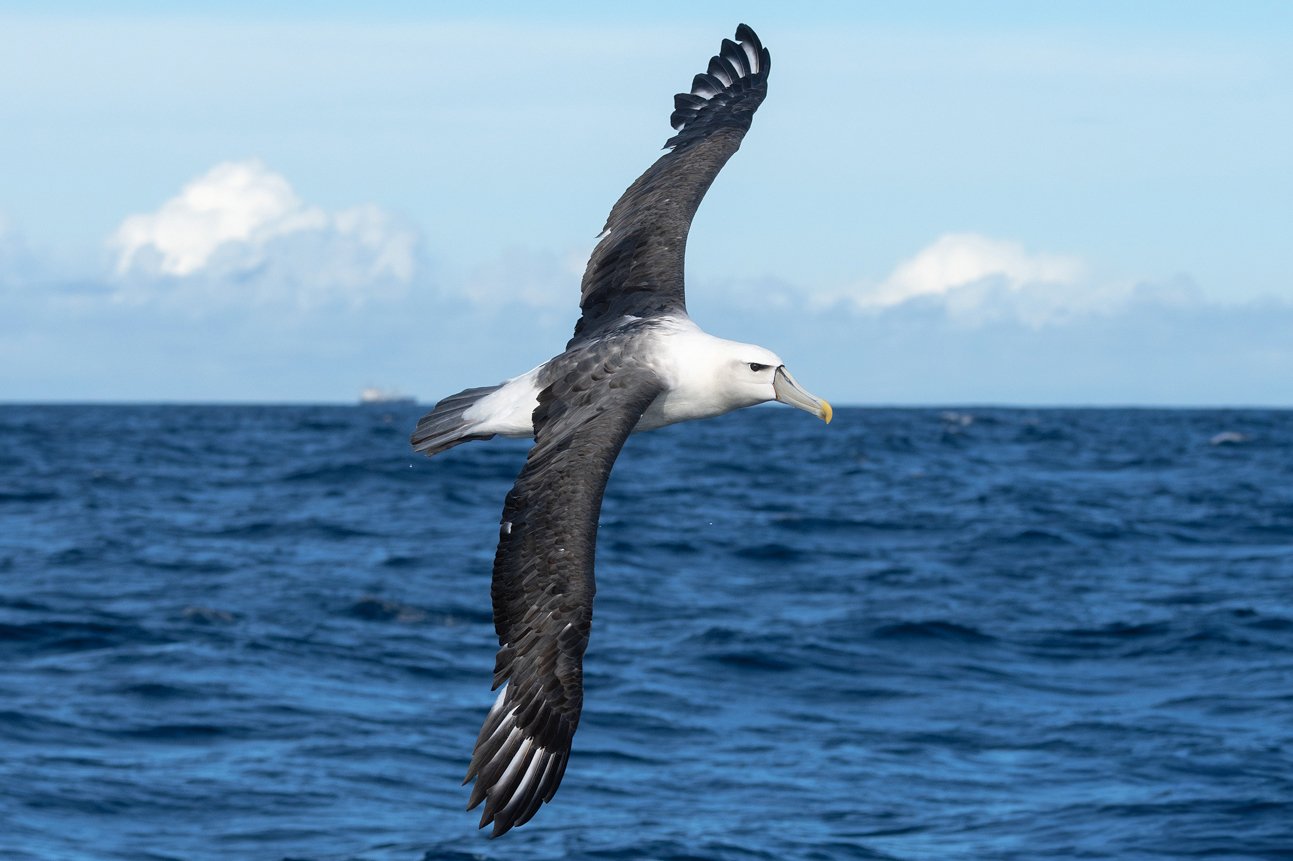
When seen: March to December (occasionally seen at other times)
Occurrence: Common visitor
Scientific name: Thalassarche steadi
White-capped Albatross are our most regularly encountered albatross species, and we can get good numbers offshore from autumn through spring, although one or two can still turn up in summer.
Theses striking seabirds are the largest of the lesser albatross group, with a impressive wingspan up to 2.6 metres, and often give excellent views as they sweep effortlessly around the boat. Seeing several of them together is always a pleasure.
Also called White-capped Mollymawk in New Zealand.
Indian Yellow-nosed Albatross
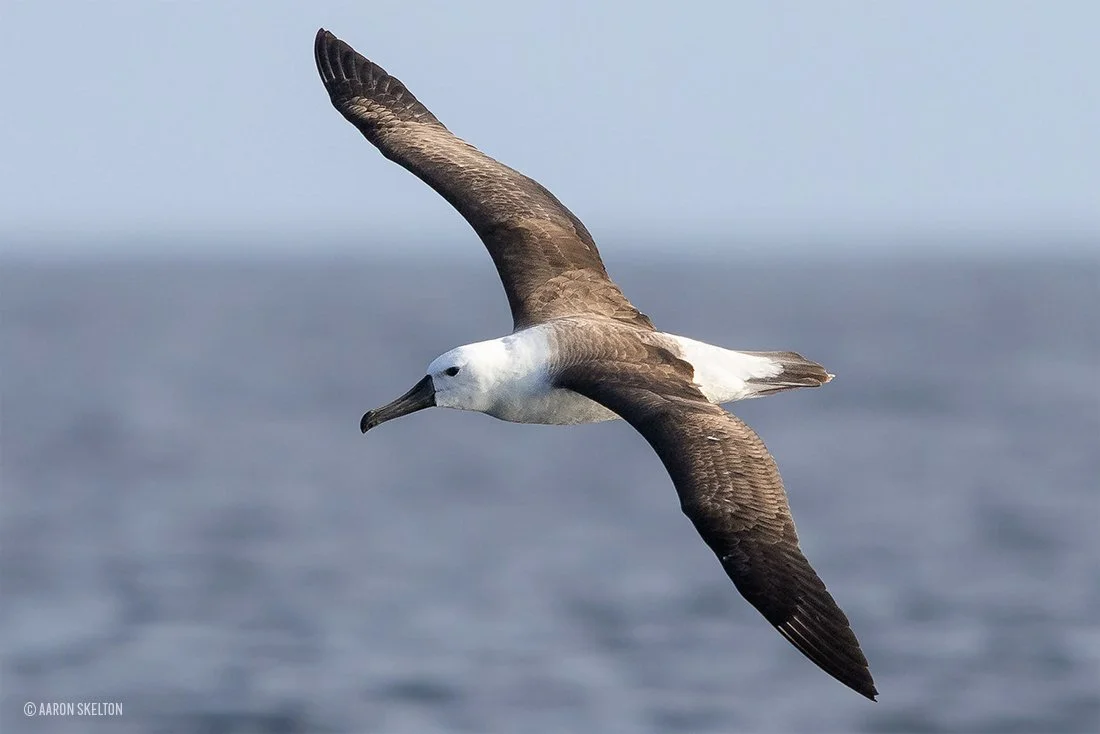
When seen: December (only encountered once)
Occurrence: Rare vagrant visitor
Scientific name: Thalassarche carteri
A very uncommon visitor to New Zealand, Indian Yellow-nosed Albatross are the smallest of the lesser albatross group, with a wingspan of up to 2.15 metres. These beautiful albatross have a long slender black bill with a striking bright yellow stripe along the top grading to rose at the tip – apart from young birds which have an all dark bill.
So far, we have only encountered it once on The Petrel Station seabird tours, and any sighting in New Zealand is very notable.
Also called Indian Yellow-nosed Mollymawk in New Zealand.

Experience these stunning seabirds for yourself
Join The Petrel Station seabird tours for a memorable day offshore among New Zealand’s extraordinary seabird life.
This is just one of the remarkable seabird species groups we’ve recorded on The Petrel Station seabird tours – also explore the Petrels, Shearwaters, Storm Petrels, Prions, Skuas and other seabird species seen.
Our Seasons page has an overview of when species could be encountered, and our Past Tour Reports include fascinating insights into what we’ve recorded offshore. We also recommend the very informative www.nzbirdsonline.org.nz