

Prions of The Petrel Station
Tutukaka, New Zealand
Prions may be small, but they are an important part of the offshore seabird story at The Petrel Station seabird tours — and in season can appear in astonishing numbers.
4
PRION SPECIES SEEN
The only place Fairy Prion breed in northern New Zealand is on the Poor Knights Islands ,and in season we can experience the spectacle of thousands of them in huge feeding frenzy workups.
Other prion species are much less frequently encountered, and because the prion species appear quite similar, this provides some great identification challenges offshore – as we scan through the Fairy Prions in the hope of finding something different.
Below are the Prion species we’ve recorded on The Petrel Station seabird tours, and when they’re most likely to be seen — though sightings may occur outside these times.
JUMP TO SPECIES:
Fairy Prion • Antarctic Prion • Broad-billed Prion • Thin-billed Prion
Fairy Prion

SPECIALTY SEABIRD of The Petrel Station
When seen: April to mid January (occasionally seen at other times)
Occurrence: Abundant local breeder
Scientific name: Pachyptila turtur
Fairy Prions are one of the defining seabirds of The Petrel Station seabird tours and an important part of what makes spring and early summer offshore from Tutukaka so exciting.
Small, elegant, and beautifully marked, they are blue-grey above, with a dark “M” pattern across the upper wings and have a broad black tail tip.
The Poor Knights Islands hold one of the largest Fairy Prion breeding populations in New Zealand, which is why they occur here in such impressive numbers. In season, they can gather in the thousands, alongside other seabirds, in the huge feeding frenzy workups that develop offshore. Seeing waves of Fairy Prions feeding in dense groups is an incredible wildlife spectacle, and a true specialty of The Petrel Station seabird tours.
Antarctic Prion
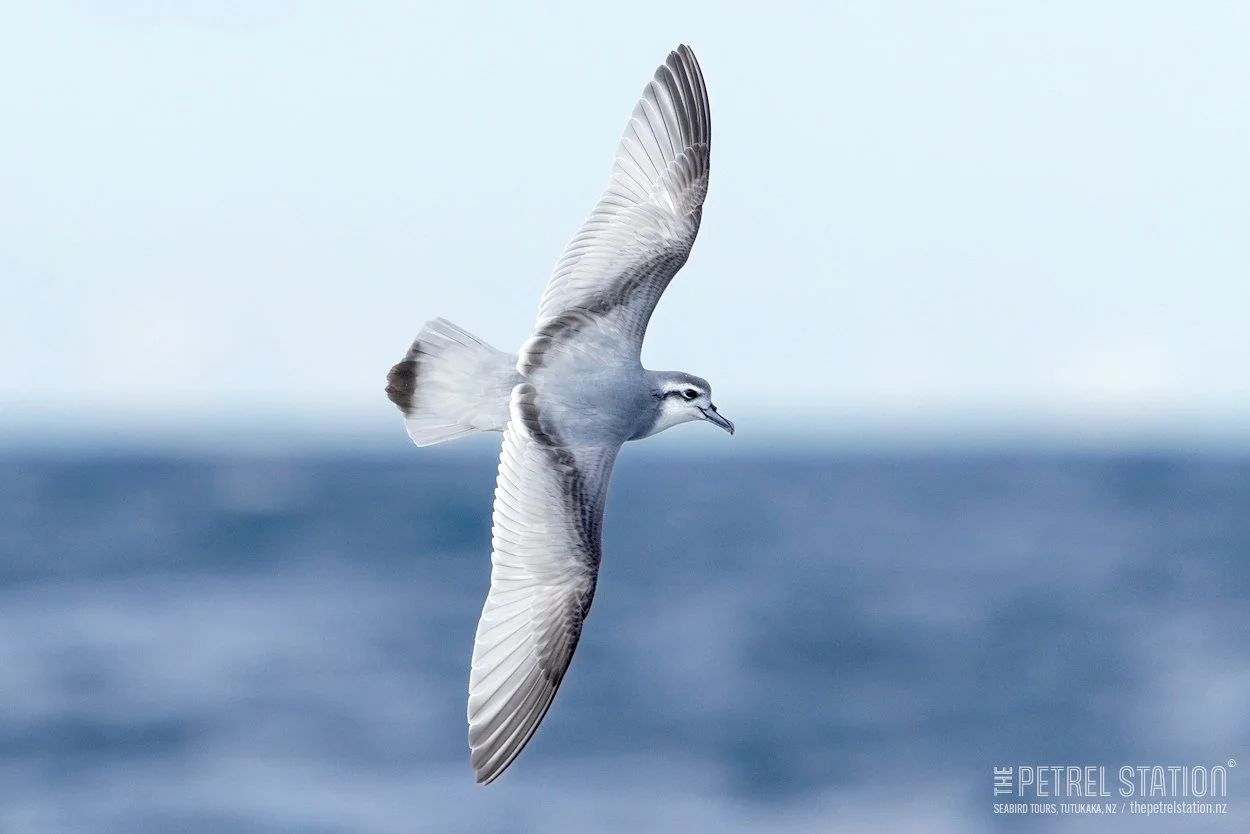
When seen: May to July
Occurrence: Occasional visitor
Scientific name: Pachyptila desolata
We encounter Antarctic Prions semi-regularly in autumn and early winter, and they are always an enjoyable species to pick out when we’re offshore. Like most prions species, they can look very similar at first glance, but once you know what to look for, the differences start to stand out.
Compared with Fairy Prion, Antarctic Prions show less black on the tail tip, a more obvious defined neck tab, stronger facial patterning, and a bill that is generally broader and a bit bigger.
Broad-billed Prion
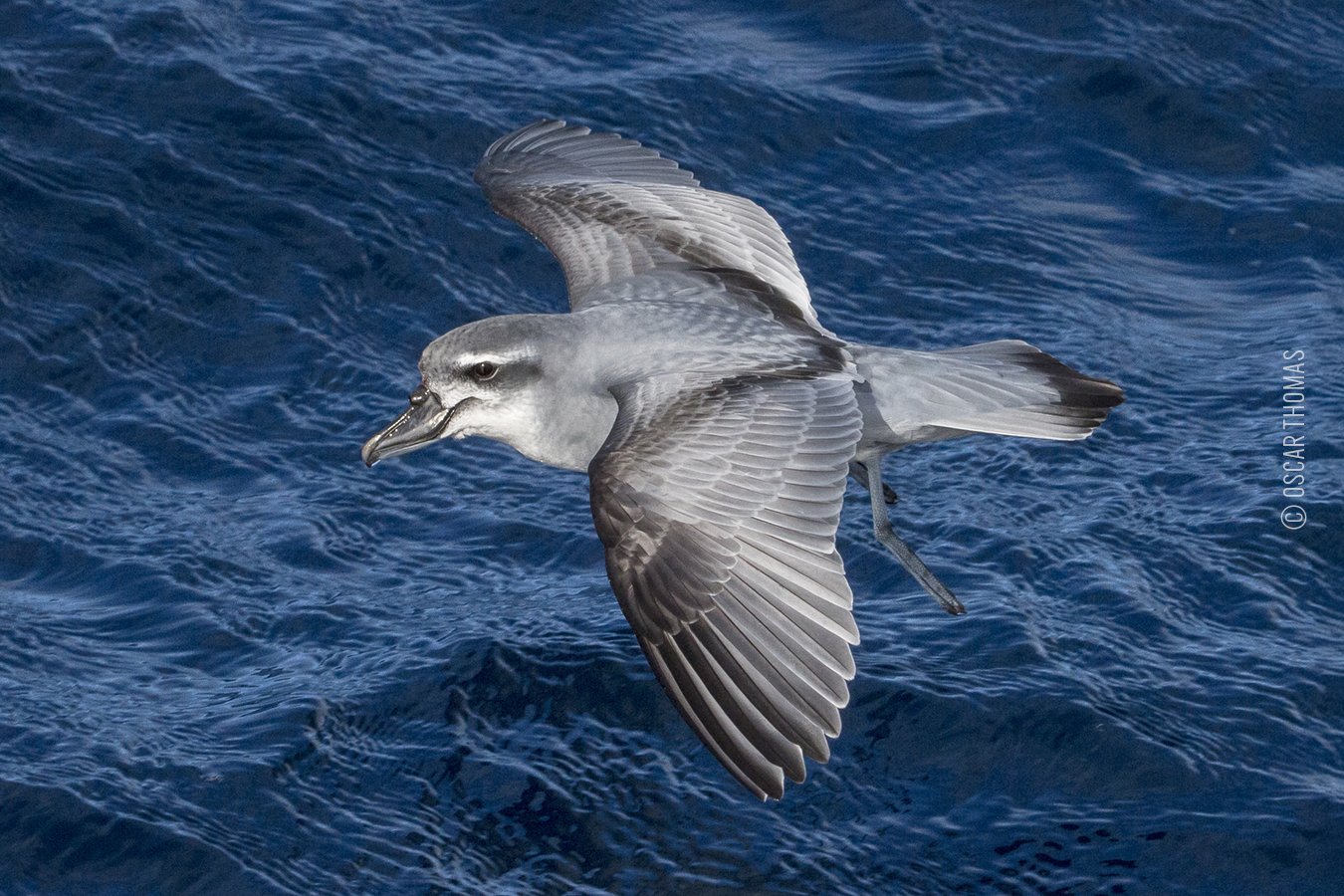
When seen: July (only encountered once)
Occurrence: Very uncommon visitor
Scientific name: Pachyptila vittata
Prions species may be tricky to separate, but it’s pretty obvious with the Broad-billed Prion and their massive bill which is the standout feature, helped by a stronger neck tab and more obvious facial patterning.
This species breeds on islands in the southern New Zealand region and the Southern Ocean, but is only scarcely seen off mainland New Zealand, mainly in winter. So far, we have encountered it only once on The Petrel Station seabird tours.
Thin-billed Prion
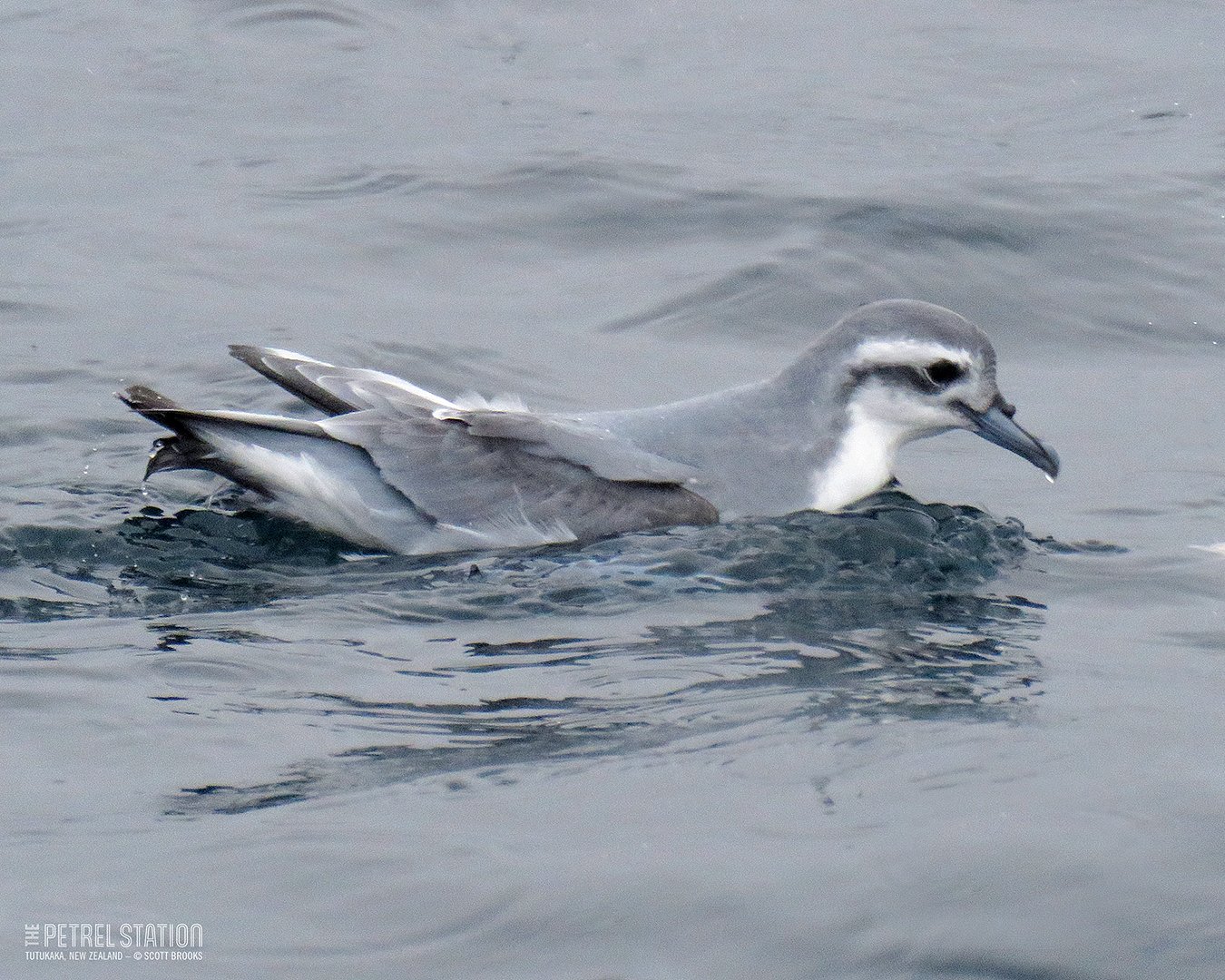
When seen: July (only encountered once)
Occurrence: Very uncommon visitor
Scientific name: Pachyptila belcheri
Thin-billed Prion are another species that can initially look similar to Fairy Prion, but there’s a few helpful differences once you get your eye in. Compared with Fairy Prion, it shows much less black on the tail tip, a more obvious neck tab, a generally slimmer look, a strong white eyebrow, and a finer bill.
They’re a scarcely seen visitor in New Zealand waters as they breed elsewhere, so any sighting offshore from Tutukaka is a real bonus.

Experience these stunning seabirds for yourself
Join The Petrel Station seabird tours for a memorable day offshore among New Zealand’s extraordinary seabird life.
This is just one of the remarkable seabird species groups we’ve recorded on The Petrel Station seabird tours – also explore the Albatross, Petrels, Shearwaters, Storm Petrels, Skuas and other seabird species seen.
Our Seasons page has an overview of when species could be encountered, and our Past Tour Reports include fascinating insights into what we’ve recorded offshore. We also recommend the very informative www.nzbirdsonline.org.nz